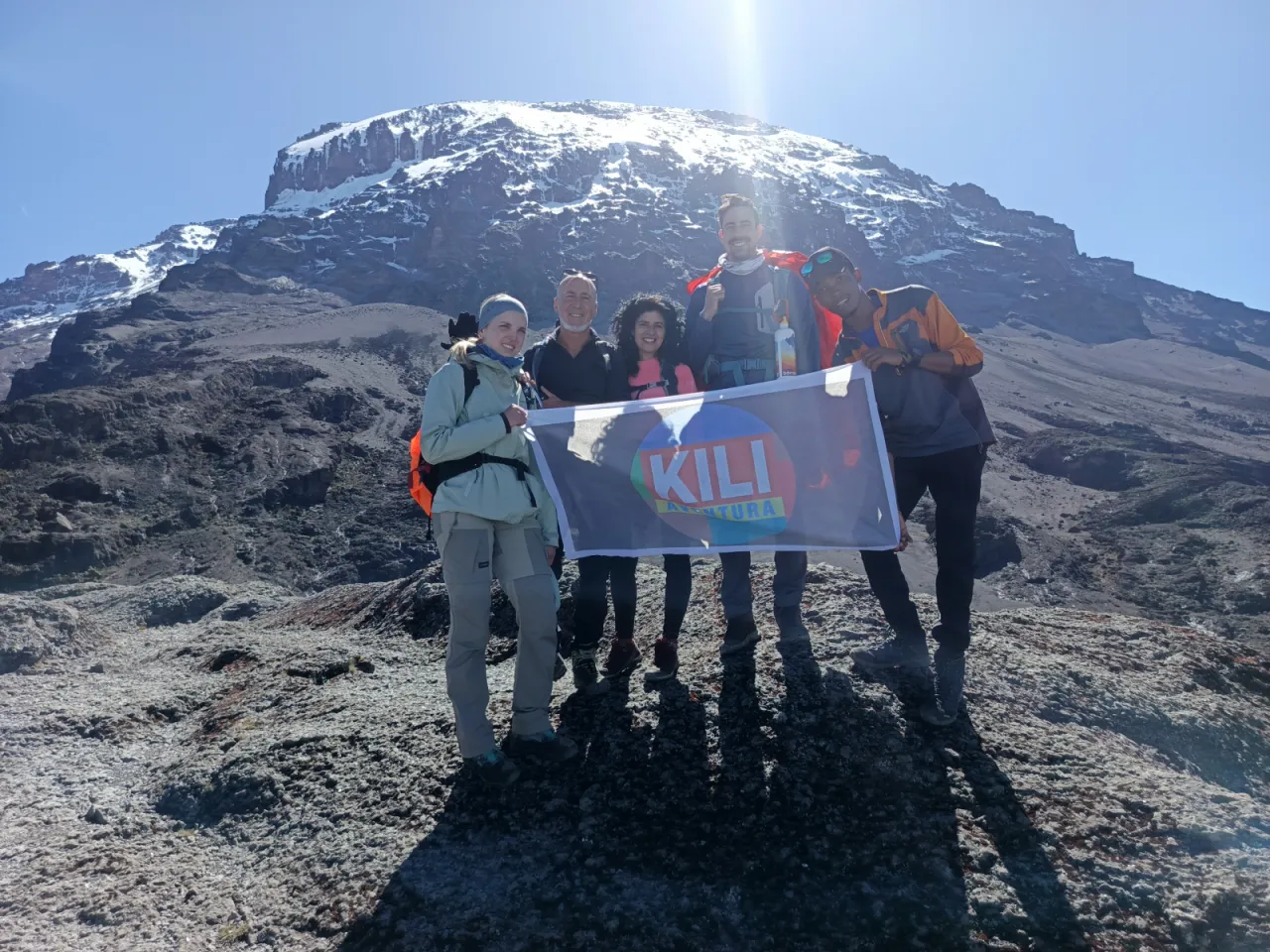
Climbing Mount Kilimanjaro
Mount Kilimanjaro is the highest mountain in Africa at 5,895 m, and you can walk to the top without technical climbing. Here is how the routes differ, how long a climb takes and how to prepare.
Kilimanjaro routes
Popular climbs
Guides and advice
What does climbing Kilimanjaro involve?
Kilimanjaro is a trek, not a technical climb. Every standard route follows a path to Uhuru Peak (5,895 m) on the crater rim of Kibo, the highest of the mountain's three volcanic cones. You walk for four to seven hours a day with a light daypack while a crew of porters and cooks carries the camp.
The challenge is altitude. You start in rainforest at around 1,800 m and finish above 5,800 m, where each breath carries roughly half the oxygen it does at sea level. Most climbers take five to nine days, and the extra days are what give your body time to adapt. Summit night starts around midnight and is the hardest part of the climb for almost everyone.
How do I choose a route?
Start with how many days you have, then weigh scenery, crowds and accommodation:
- Longer routes such as the Lemosho and Northern Circuit give the best acclimatisation and the highest chance of reaching the top.
- Machame is scenic and popular, with a well-known climb-high, sleep-low profile.
- Marangu is the only route with hut accommodation.
- Rongai approaches from the drier north side and is quieter.
- Umbwe is steep and direct, best left to experienced trekkers.
Use the route comparison to see them side by side, or answer four questions in the route finder.
When is the best time to climb?
The two dry seasons, roughly late June to October and January to early March, give the most reliable conditions. The long rains from about March to May bring muddy trails and cloud, and the short rains usually fall in November. You can climb all year, but a dry-season date makes the experience more comfortable. Read more in our guide to the best time to climb.
Key facts
- Summit
- Uhuru Peak, 5,895 m
- Typical climb
- 5 to 9 days on the mountain
- Technical skills
- None needed on the standard routes
- Main risk
- Altitude sickness; more days lower the risk
- Protected area
- Kilimanjaro National Park, a UNESCO World Heritage Site
Frequently asked questions
Do I need climbing experience to climb Kilimanjaro?
No. The standard routes are hiking trails and no ropes or technical skills are needed. What matters most is good general fitness, enough days to acclimatise and a steady pace.
How many days does it take to climb Kilimanjaro?
Most climbs take five to nine days on the mountain. Seven or eight days is a good balance for most people, because the extra time improves acclimatisation and your chance of reaching the summit.
Can I climb Kilimanjaro without a guide?
No. Kilimanjaro National Park requires every climber to be accompanied by a licensed guide, and climbs are organised through registered operators.
Which airport is closest to Kilimanjaro?
Kilimanjaro International Airport (JRO), between Moshi and Arusha. Most climbers fly in there and transfer to their hotel the same day.