5-Day Family Safari in Tanzania
A private safari paced for children: no drive longer than about three hours, midday breaks at the lodge, two nights in Tarangire and a half day in the Ngorongoro Crater. Plenty of wildlife without long, cramped days.
- Duration
- 5 days
- Style
- Mid-range
- Travel
- Private safari
- Visits
- Tarangire National Park, Lake Manyara National Park, Ngorongoro Conservation Area
Children tend to love the animals and hate the driving. This itinerary is built around that. It stays in the parks closest to Arusha, so no single drive is longer than about three hours, and most days have a break in the middle when you return to the lodge, eat lunch properly and let the children swim, nap or run around before an afternoon drive.
You spend two nights near Tarangire, known for its elephant herds and baobabs, then drive through Lake Manyara National Park on the way up to the Karatu highlands. From there you do a morning in the Ngorongoro Crater, where a lot of wildlife is visible in a small area, and come back to the lodge for the afternoon. The last day is an easy drive back to Arusha.
The Serengeti is left out on purpose. Getting there and back by road means two long days in the vehicle, which is hard going for younger children. With older children, or more time, it can be added.
Highlights
- No drive longer than about three hours, with the longest on the last day
- Midday breaks at the lodge on most days for lunch, rest and, where available, the pool
- Two nights at Tarangire, known for large elephant herds
- Lake Manyara's baboons, blue monkeys and hippo pools, which children usually enjoy
- A morning in the Ngorongoro Crater, with plenty to see in a small area
- Private vehicle and guide, so you stop when the children need to
Day 1: Arusha to Tarangire, afternoon game drive
There is no need for an early start on the first day. Your guide collects you from your Arusha hotel at about 8:30–9:00 a.m., after a relaxed breakfast, and the drive to Tarangire takes roughly 1.5 hours on tarmac, about 121 km. Look out of the window for Maasai herders with their cattle and goats along the road; it breaks the drive up nicely for children.
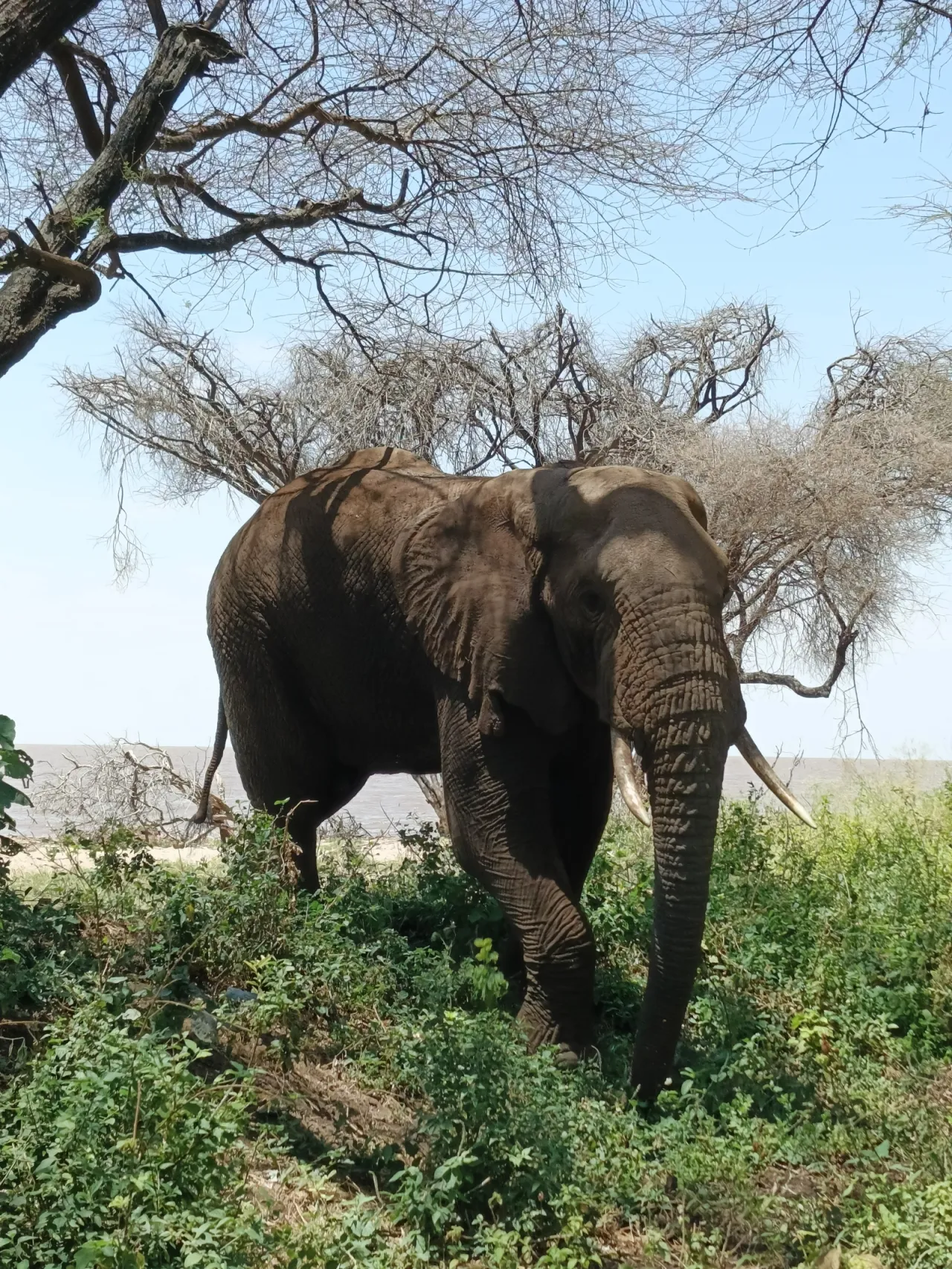
You enter the park and game drive gently towards your lodge, arriving in time for lunch. Tarangire is known for elephants, and in the dry season, roughly July to November, family groups gather along the Tarangire River in large numbers, which is easy for children of any age to enjoy. The giant baobab trees on the ridges, some more than 1,000 years old, are a good talking point too.
After lunch there is time to rest, unpack and, if your lodge has one, use the pool through the hottest part of the day. At around 4:00 p.m. you head out for a two-hour late-afternoon drive, when the light is soft and animals come down to drink, and you are back before dark. Dress children in neutral colours rather than bright or very dark clothes, as tsetse flies are attracted to them.
Overnight: a lodge or tented camp.
Day 2: Tarangire: morning and afternoon game drives
Today stays in one place, which is a relief for families after a long-haul flight. You set out at around 7:00 a.m., a little later than a standard safari, with a snack box for anyone who is not hungry at breakfast time. Early morning is when animals are most active and the air is cool, so this is the main game drive of the day.
Your guide works along the river, where elephants, buffalo, zebra, wildebeest and giraffe come to drink, and checks the trees and termite mounds for lions, leopards and mongooses. Tarangire also has a rich resident birdlife, and a children's bird checklist or a simple animal-spotting list keeps younger ones busy between sightings. Being a private safari, you can turn back whenever attention runs out.
You return to the lodge at around 11:30 a.m. for lunch and a long midday break: swimming, reading, a sleep, or watching the animals that visit the lodge's own waterhole if there is one. At around 4:00 p.m. you go out again for a shorter afternoon drive, returning before sunset. Tarangire also offers night drives and ranger-guided walks, which may suit older children; they need to be arranged in advance.
Overnight: a lodge or tented camp.
Day 3: Tarangire to Lake Manyara and the Karatu highlands
After breakfast you leave at about 8:00 a.m. and drive roughly an hour to the main gate of Lake Manyara National Park, near the small town of Mto wa Mbu. Manyara is a compact park along the foot of the Rift Valley escarpment, which suits children well: the scenery changes every few minutes and the animals are often close to the track.
The drive begins in the groundwater forest, where baboon troops groom and squabble on the road and blue monkeys move through the fig and mahogany trees. Children usually find the baboons more entertaining than anything else all week. Further on, the forest opens into woodland and grassy floodplain with elephants, giraffe and buffalo, and the hippo pools near the lake shore are a good place to stop and watch, with pelicans and sometimes flamingos out on the water.
After about three hours you have a picnic lunch at a designated site, then leave the park and drive up the escarpment to Karatu, about 30 km and under an hour. You arrive by mid-afternoon with the rest of the day free. Karatu is cooler and greener than the lowland parks, so bring a jumper for the evening.
Overnight: a lodge or tented camp.
Day 4: Ngorongoro Crater morning, afternoon at the lodge
This is the one early start of the trip, and it is worth it. You leave Karatu at about 6:30 a.m. with packed breakfasts and warm layers: the crater rim is over 2,000 m and mornings are cold and often misty. It is roughly 30 minutes to the Lodoare gate of the Ngorongoro Conservation Area and about an hour up through the forest to the rim and the descent road.
The crater is a volcanic caldera about 20 km across and 610 m deep, and the NCAA estimates that more than 25,000 large animals live on its floor, most of them all year. That density is what makes it good for families: zebra, wildebeest, buffalo and hyena are often in view at once, hippos wallow in the pools, and lion and elephant are regularly seen. It is also one of the best places in Tanzania to look for black rhino, though usually at a distance, so binoculars help. Children stay in the vehicle except at designated picnic sites.
Instead of a full day, you spend around four hours on the floor, have lunch at a picnic site, and drive back up to Karatu, arriving by mid-afternoon. The rest of the day is for resting, the pool if there is one, or a walk in the lodge grounds.
Overnight: a lodge or tented camp.
Day 5: Karatu to Arusha
A slow morning to finish. After breakfast you leave Karatu at about 9:00 a.m. and drive back towards Arusha, roughly 2.5–3 hours on tarmac with a break along the way, down the Rift Valley escarpment and past the lake.
The road passes through Mto wa Mbu, a busy market town at the foot of the escarpment where fresh fruit is sold along the roadside. It makes a good stop for stretching legs and a snack. Your guide can also suggest a stop at a craft market or a Maasai area along the road if the children want to buy a souvenir or ask questions about what they saw earlier in the week.
Depending on your plans, you have lunch on the road or in Arusha, and reach your hotel by early to mid-afternoon. That leaves time for a rest before an evening flight from Kilimanjaro International Airport, about an hour's drive from Arusha, or for another night in town. If you are continuing to Zanzibar or the coast, your guide can drop you at the airport directly.
Destinations
Frequently asked questions
What age is suitable for a family safari in Tanzania?
There is no single rule, but many families find that children from about six upwards get the most out of game drives, because they can sit through a few hours in a vehicle and enjoy spotting animals. Some lodges and activities, such as walks, have their own minimum ages, so check these when booking.
Why does this family safari not include the Serengeti?
Reaching the Serengeti by road and coming back takes two long days in the vehicle, which is hard on younger children. Staying in Tarangire, Lake Manyara and Ngorongoro keeps every drive to about three hours or less, with plenty of wildlife. It can be extended to the Serengeti for families with older children or more time.
Is a safari safe for children?
With a professional guide and sensible rules, yes. Children stay in the vehicle during game drives and follow lodge guidance about walking around at night. Northern Tanzania has a malaria risk, so see a travel-medicine doctor well before the trip about prevention for each family member.
What should children pack for a safari?
Neutral-coloured, medium-weight clothes, a warm fleece for early mornings and the crater rim, a sun hat, sunscreen and a pair of children's binoculars. A small animal checklist or notebook helps keep them engaged between sightings.