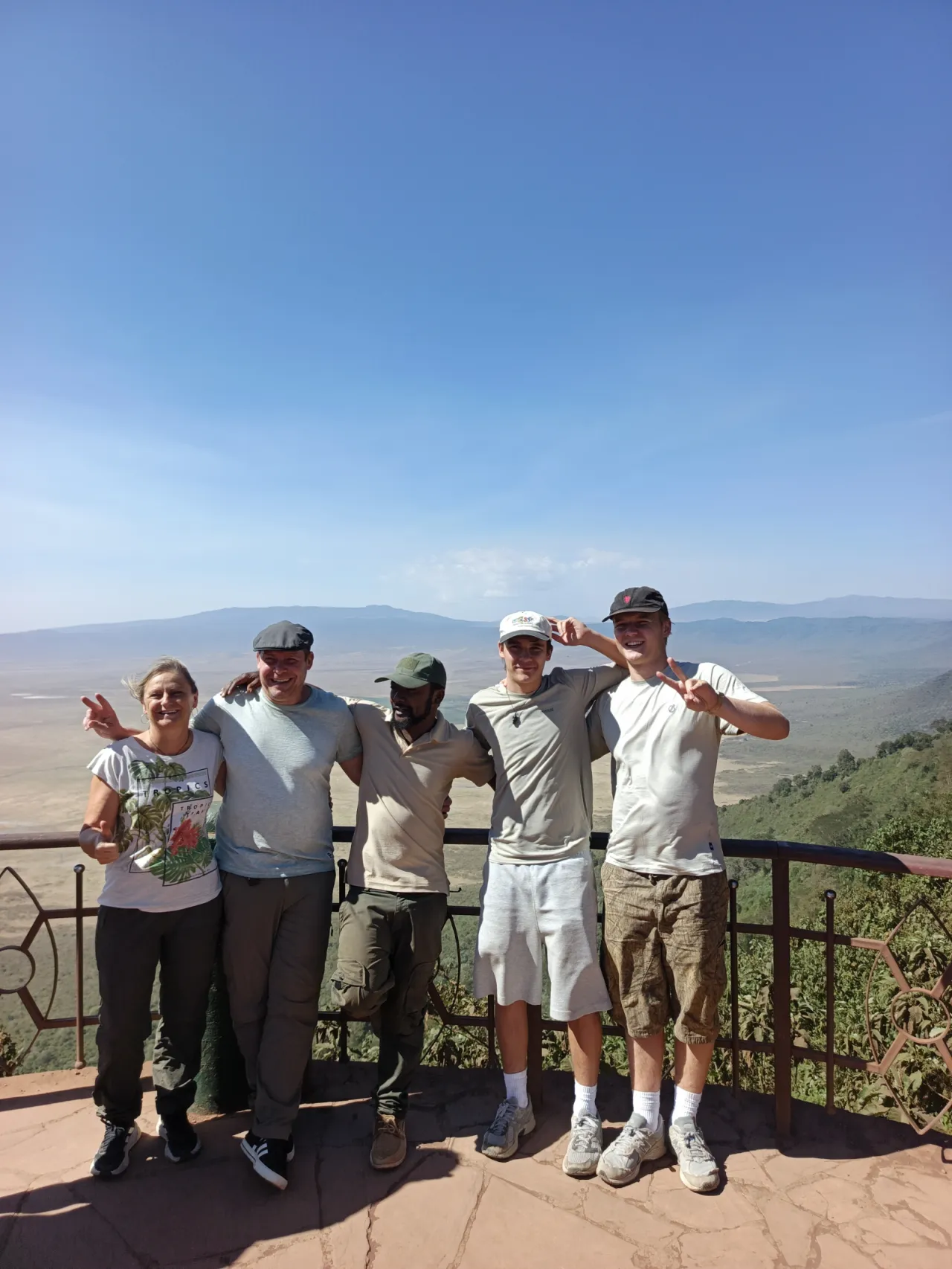
Ngorongoro Conservation Area
A UNESCO-listed multiple land-use area where wildlife and Maasai pastoralists share the land, run by the Ngorongoro Conservation Area Authority. Its centrepiece is a 260 km², 610 m deep volcanic caldera full of resident game.
Key facts
- Area
- About 8,292 km² (NCAA); the UNESCO World Heritage property covers 809,440 ha
- Established
- 1959, as a multiple land-use conservation area split from the Serengeti
- Managed by
- Ngorongoro Conservation Area Authority (NCAA), not TANAPA
- UNESCO status
- World Heritage Site since 1979 (natural), cultural criteria added 2010; part of the Ngorongoro Lengai UNESCO Global Geopark
- Ngorongoro Crater
- About 260 km² floor, roughly 20 km across and 610 m deep (NCAA); UNESCO calls it the largest unbroken caldera in the world
- Signature wildlife
- About 25,000 large animals in the crater, including black rhino, lion, elephant, buffalo, wildebeest and zebra
- How to get there
- By road from Arusha via Mto wa Mbu and Karatu; usually combined with Lake Manyara, Tarangire or the Serengeti
The Ngorongoro Conservation Area (NCA) covers about 8,292 km² of highland, crater and plain between Lake Manyara and the Serengeti. It is not a national park. It is run by the Ngorongoro Conservation Area Authority (NCAA) under the Ministry of Natural Resources and Tourism, and since 1959 it has been managed as a multiple land-use area where wildlife coexists with semi-nomadic Maasai pastoralists. You will see Maasai herders and their cattle on the drive in, which is part of the point.
UNESCO inscribed the NCA as a World Heritage Site in 1979 for its natural values and added cultural criteria in 2010, so it is listed for both nature and human history. The cultural side comes from Olduvai Gorge and the Laetoli footprints, which together span almost four million years of human evolution. The area is also part of the Ngorongoro Lengai UNESCO Global Geopark.
Most visitors spend one day in the Ngorongoro Crater itself. It is small, busy at peak times and wonderful anyway: few places in Africa pack so much visible wildlife into one bowl.
When to go
The crater is open and worth visiting all year, because most of its animals are resident. June to October is dry, with clear views but cold, often misty mornings up on the crater rim. From about December to April the Ndutu plains in the west of the NCA host the migration herds and calving, which makes those months the best for combining the crater with Ndutu. The long rains (roughly March to May) mean greener scenery and fewer vehicles.
Safaris visiting Ngorongoro Conservation Area
- 11-Day Kilimanjaro Machame Climb and Safari
- 13-Day Kilimanjaro Lemosho Climb and Safari
- 3-Day Tarangire, Lake Manyara and Ngorongoro Safari
- 4-Day Tarangire, Serengeti and Ngorongoro Safari
- 5-Day Family Safari in Tanzania
- 6-Day Classic Tanzania Safari
- 7-Day Great Migration Calving Safari
- 7-Day Great Migration River Crossing Safari
What is the Ngorongoro Crater?
The Ngorongoro Crater is a volcanic caldera, formed around 2.5 million years ago when a large volcano collapsed in on itself, according to the NCAA. The floor covers almost 260 km², the crater is about 20 km across, and the walls drop about 610 m from rim to floor.
Inside you find open grassland, a shallow lake, swamps and patches of woodland. The walls do not fence the animals in, but water and grazing are available all year, so most stay. The NCAA puts the crater population at over 25,000 animals, including wildebeest, zebra, buffalo, gazelles, hippo and spotted hyena. UNESCO notes that the conservation area has one of the highest densities of mammalian predators in Africa.
Can you see rhino in the Ngorongoro Crater?
The crater is one of the most reliable places in Tanzania to see black rhino, which UNESCO lists among the property's globally threatened species. They are few in number and often keep their distance, so sightings are likely but not certain, and you may need binoculars.
The other members of the Big Five are also present: lion and buffalo are seen on most visits, elephants are around the swamps, and leopard sightings on the open floor are uncommon.
How does a day in the crater work?
You drive down a steep road from the rim, spend several hours on the crater floor and drive back up before the afternoon is out. NCAA rules allow only four-wheel-drive vehicles into the crater, and walking on the floor is not permitted, although guided walks are allowed on the rim.
Go early. The first hours of the day are usually quieter and the light is better, and by midday a popular lion sighting can draw a queue of vehicles. Bring a warm layer: mornings on the rim are cold, and the floor can be hot by early afternoon.
What else is there in the Ngorongoro Conservation Area?
More than most visitors realise. The NCA stretches far beyond the crater:
- Olduvai Gorge: a deep ravine whose layers hold a sequence of hominin species, from Zinjanthropus boisei to Homo habilis and Homo erectus, according to UNESCO. The NCAA runs a museum there.
- Laetoli: fossil hominin footprints linked by UNESCO to the development of walking upright.
- Empakaai Crater: about 8 km across with a soda lake covering much of its floor. The NCAA describes a walk down of about an hour and a climb back of about two and a half, with an armed ranger.
- Olmoti Crater and the highland forests: quieter walking country.
- Ndutu plains: the western short-grass plains where the migration herds usually gather and calve from about December to April.
How do you fit Ngorongoro into a safari?
Ngorongoro sits on the road between Arusha and the Serengeti, so it fits naturally at the start or end of a northern-circuit safari. Many itineraries spend a night near the rim or in Karatu, do the crater the following morning and drive on to the Serengeti in the afternoon, or do it on the way back.
From December to April, pairing the crater with a stay at Ndutu makes sense, because the migration herds are usually right there. See the Serengeti page for the migration pattern and Tanzania safaris for sample routes.
Why do the fees work differently from the national parks?
Because Ngorongoro is run by the NCAA rather than TANAPA, it has its own tariff, including a per-vehicle crater service fee for each trip down onto the crater floor on top of the per-person entry charges. Fees change, so check the current NCAA tariff when you book rather than relying on older figures. A reputable operator will show NCAA fees clearly in the quote.
If you are planning a route through Ngorongoro, you can ask Kili Aventura to build it around the season you are travelling in.
Sources
- UNESCO World Heritage Centre — Ngorongoro Conservation Area
- Ngorongoro Conservation Area Authority (NCAA) — About NCAA
- Ngorongoro Conservation Area Authority (NCAA) — Ngorongoro Crater
- Ngorongoro Conservation Area Authority (NCAA) — home page
- Ngorongoro Conservation Area Authority (NCAA) — Empakaai Crater
- Ngorongoro Conservation Area Authority (NCAA) — Tariffs
Checked 2026-09-25.
Frequently asked questions
Is Ngorongoro a national park?
No. It is a conservation area managed by the Ngorongoro Conservation Area Authority (NCAA), not by Tanzania National Parks (TANAPA). Unlike a national park, people live there: Maasai pastoralists graze livestock alongside the wildlife.
How deep is the Ngorongoro Crater?
The NCAA gives the depth as about 610 m, with a diameter of roughly 20 km and a floor area of almost 260 km². UNESCO describes it as the largest unbroken caldera in the world.
How long do you need in the Ngorongoro Crater?
One full morning to a full day on the crater floor is enough for most visitors. Add time if you want to visit Olduvai Gorge, walk at Empakaai or stay at Ndutu during the calving season.
Can you walk in the Ngorongoro Crater?
Not on the crater floor, where the NCAA allows game viewing only from four-wheel-drive vehicles. Guided walks are allowed on the rim and in other parts of the conservation area, such as Empakaai Crater, with an armed ranger.
Is the Ngorongoro Crater worth it?
For most first-time visitors, yes. The density of visible wildlife is exceptional and black rhino are more likely here than in most places. The downsides are cost and vehicle numbers at peak times, which an early start helps with.