7-Day Great Migration Calving Safari
Three nights on the Ndutu and southern Serengeti plains during the wildebeest calving season, usually January to March, plus Lake Manyara, Olduvai Gorge and a full morning in the Ngorongoro Crater. Private vehicle and guide throughout.
- Duration
- 7 days
- Style
- Mid-range
- Travel
- Private safari
- Visits
- Lake Manyara National Park, Serengeti National Park, Ngorongoro Conservation Area
This safari is built around one event: the wildebeest calving on the short-grass plains of Ndutu and the southern Serengeti. The Ngorongoro Conservation Area Authority (NCAA) says the herds usually arrive from the end of December and stay until about April, and TANAPA names January to February as the calving season. Scientists have recorded that most calves are born within a peak of two to three weeks, a synchrony that swamps the predators with more newborns than they can catch. That is why lion, cheetah and spotted hyena are so busy here at this time of year.
The plan gives you three full nights near Ndutu, so your guide has time to follow the herds wherever the rain has put them that week. Around it sit a gentle first day at Lake Manyara, a stop at Olduvai Gorge on the way in, and a crater day on the way out, when the Ngorongoro Crater's resident wildlife, including black rhino, fills the gap if the herds have moved.
The honest caveat: the herds follow rainfall, which varies every year. In a dry spell they can drift away from Ndutu for days, and after heavy rain the plains' black soils turn to deep mud. Dates chosen around the typical pattern, usually late January to early March, give you the best odds, but no one can promise where the herds or a birth will be on a given day. The night before the safari and any night after it are spent in Arusha.
Highlights
- Three nights on the Ndutu and southern Serengeti calving grounds
- Wildebeest calving season, typically late January to early March
- Predator action around the herds: lion, cheetah and spotted hyena
- Olduvai Gorge, one of the key sites in the story of human evolution
- A morning on the floor of the 610 m deep Ngorongoro Crater
- Lake Manyara's groundwater forest and Rift Valley escarpment
- Private vehicle and guide, so you set the pace at each sighting
Day 1: Arusha to Lake Manyara National Park and the Ngorongoro highlands
Your guide collects you from your Arusha hotel after breakfast, usually around 08:00, and you drive west on tarmac towards the Great Rift Valley. It is about 115 km to Lake Manyara, roughly two hours, passing Maasai grazing land and the busy market town of Mto wa Mbu just below the escarpment.
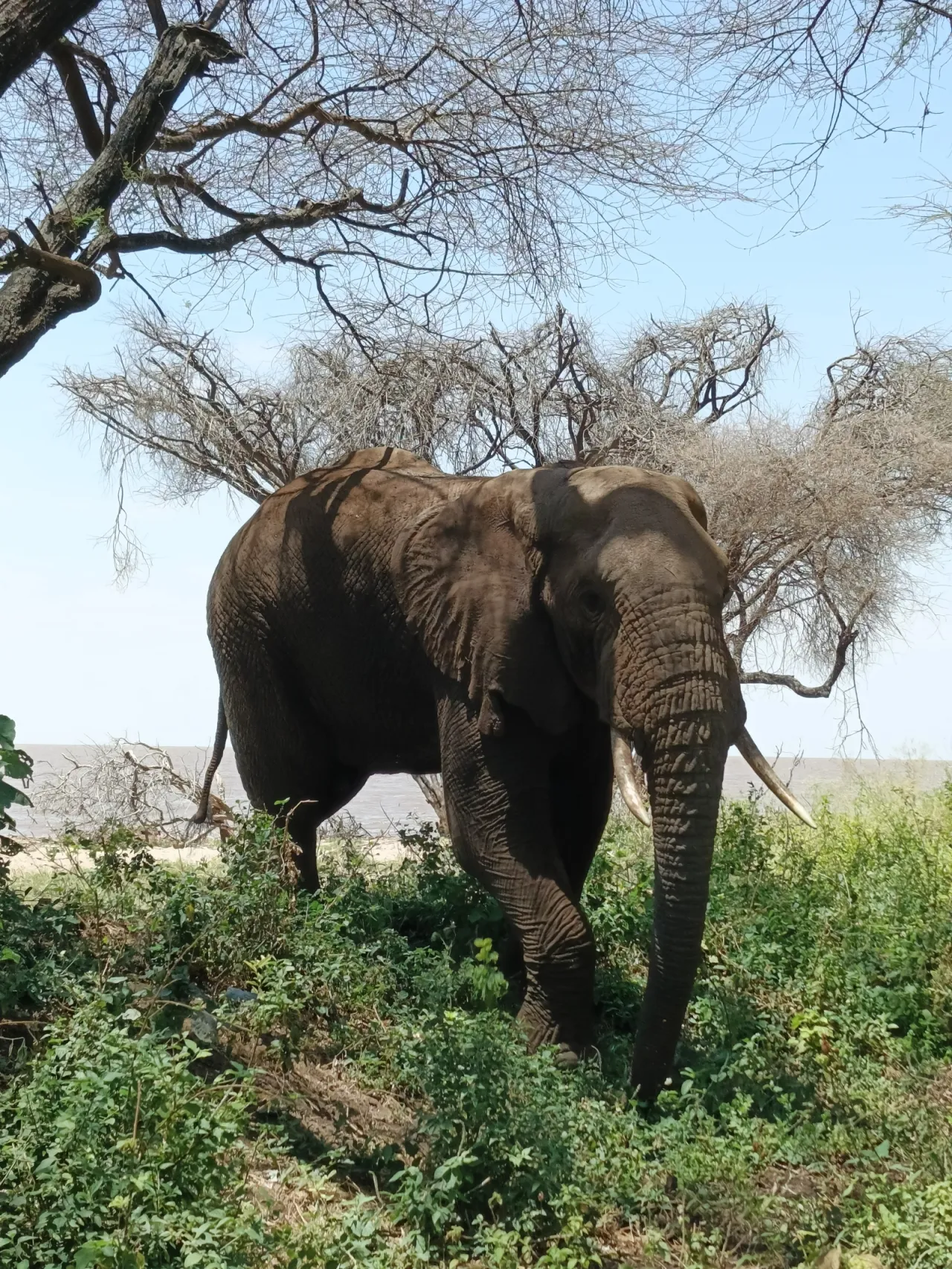
Lake Manyara National Park is a good way to ease in. Springs at the base of the Rift wall feed a green groundwater forest near the gate, where large troops of olive baboons and blue monkeys move through the fig and mahogany trees. Further south the forest opens onto acacia woodland and grassy floodplain along the soda lake, with elephant, buffalo, giraffe and hippo, and in some years large numbers of flamingos. Lions here sometimes rest in trees, though that is never predictable. January and February are good birding months, with migrant species from Europe and Asia in the park.
After a picnic lunch and an afternoon game drive, you climb the escarpment to Karatu or the edge of the Ngorongoro highlands, about half an hour to an hour away, where the air is noticeably cooler. Overnight: a lodge or tented camp.
Day 2: Ngorongoro highlands and Olduvai Gorge to Ndutu
An early breakfast, then you drive up through the montane forest to the Ngorongoro Crater rim for your first look down into the caldera. You do not descend today; the crater comes at the end of the trip. The road then drops west across open highland grassland where Maasai herders water their cattle, a reminder that the Ngorongoro Conservation Area is shared land, not a national park.
Mid-morning you stop at Olduvai Gorge, where the NCAA runs a small museum. The gorge's layers have yielded fossils of several hominin species, including Homo habilis, and the nearby Laetoli footprints are among the oldest evidence of walking upright. An hour here puts the landscape you are about to cross into a very long perspective.
From Olduvai the track runs onto the short-grass plains towards Ndutu, on the boundary between the conservation area and the southern Serengeti. The whole drive from Karatu is roughly three to four hours plus stops. If the herds are close, you will start seeing lines of wildebeest well before you arrive, and you game-drive the last stretch around Lake Ndutu and Lake Masek before sunset. Overnight near Ndutu: a lodge or tented camp.
Day 3: Full day on the Ndutu calving plains
Today is about time with the herds. You leave early, often just after first light with coffee and a packed breakfast, because the first hours are when predators are most active and births are most often seen. Your guide will already have asked other guides where the main concentrations are; in a typical calving season they spread over the open plains within reach of Ndutu.
Wildebeest usually give birth in the middle of the herd, and a calf is typically on its feet within minutes. That is the whole point of the calving synchrony: with so many young born in the same few weeks, predators cannot take more than a fraction of them. You may watch spotted hyena patrolling the edges, lions lying up by a waterhole, or a cheetah working the open grass, which suits its hunting style. Zebra and Thomson's gazelle move with the wildebeest too.
Sightings are never guaranteed, and a day here can include long, quiet stretches. With a private vehicle you can stay with one herd for an hour rather than ticking off a list. Lunch is a picnic on the plains or back at camp in the heat of the day, then out again for the late-afternoon light. Overnight near Ndutu: a lodge or tented camp.
Day 4: Southern Serengeti plains: following the herds
The herds do not stay put. After rain they spread across the treeless southern plains of Serengeti National Park; in a dry week they may bunch near water around Ndutu. Today's route depends on where they are, and your guide may head east towards the Gol Kopjes or north-west across the park boundary, with a packed lunch so you can stay out all day.
The southern plains feel enormous: short grass on volcanic soils, horizons in every direction, and granite kopjes rising like islands. Those kopjes are where cheetah and lion rest and watch, so they are worth checking even when the herds are elsewhere. Look for golden jackal, bat-eared fox and ostrich, and for vultures circling, which can point to a recent kill.
January to March usually brings a drier spell between the short and long rains, but afternoon storms happen, and when they do the black soils become sticky within an hour. Guides pick their tracks with that in mind, so part of the day may be spent choosing routes as much as spotting animals. You return to camp in the late afternoon. Overnight near Ndutu: a lodge or tented camp.
Day 5: Ndutu woodlands and lakes
Your third full day in the area gives you a second chance at anything you have missed, and a different habitat. Around Lake Ndutu and Lake Masek, a soda lake the NCAA describes as an important water source for wildlife, the plains give way to acacia woodland and marsh, which hold wildlife all year: giraffe, elephant, lion, leopard and the smaller carnivores such as genet and serval. The lake shores attract flamingos in some seasons.
Most guests use this day to return to the herds in the morning, since calving continues for weeks and every day on the plains is different, then spend the afternoon in the woodland. Leopard are shy here but do occur in the acacias. The pace is yours: some people like a long lunch and a rest at camp, others want to be out from dawn to dusk.
This is also the day to talk to your guide about priorities for the crater tomorrow, whether that is rhino, lion or simply photographs of the caldera floor. If the herds have moved further than expected, your guide may start the day earlier and drive further to reach them. Overnight near Ndutu: a lodge or tented camp.
Day 6: Ndutu to the Ngorongoro Crater
A very early start, usually before 06:00, so you reach the crater while it is quiet. The drive back up through the highlands from Ndutu takes roughly two to three hours, and the crater rim can be cold and misty at that hour, so keep a fleece handy.
The Ngorongoro Crater is a collapsed volcano about 20 km across with a floor of almost 260 km², some 610 m below the rim according to the NCAA. Only four-wheel-drive vehicles are allowed down and you stay in the vehicle on the floor. Water and grazing are available all year, so more than 25,000 large animals live here: buffalo, wildebeest, zebra, hippo, spotted hyena and some of the most visible lions in Tanzania. It is also one of the most reliable places in the country to see black rhino, although they often keep their distance.
You spend several hours on the floor, with a picnic lunch at one of the designated sites, before climbing back up to the rim before the afternoon is out. Then you drive to Karatu or the rim for the night. Overnight: a lodge or tented camp.
Day 7: Ngorongoro highlands to Arusha and departure
A slower morning after six days of early starts. Have breakfast at your own pace, then set off back towards Arusha, a drive of roughly three hours on tarmac down the escarpment and across the Rift Valley floor. If you would like a break on the way, the town of Mto wa Mbu, below the escarpment, is a good place to stretch your legs, and there are craft and carving shops along the road nearer Arusha.
Your guide drops you at your Arusha hotel in the early afternoon or takes you straight to Kilimanjaro International Airport (JRO), about an hour beyond Arusha, for an evening flight. If your flight leaves early in the day, add a night in Arusha before this day so you are not rushing the crater; ask us to plan the timing around your ticket.
Before you say goodbye, it is worth asking your guide to write down the list of species you saw. On a calving safari that list is usually longer than people expect, from wildebeest newborns to the smallest birds on the plains.
Destinations
Frequently asked questions
When is the wildebeest calving season in Tanzania?
Calving usually peaks in January and February on the short-grass plains around Ndutu and the southern Serengeti. The NCAA says the herds generally arrive at Ndutu from the end of December and stay until around April. Exact timing shifts each year with the rain.
Is Ndutu in the Serengeti or the Ngorongoro Conservation Area?
Ndutu sits in the Ngorongoro Conservation Area, on the edge of the southern Serengeti plains, and the herds move freely across the boundary. That is why a calving safari usually involves fees for both the conservation area and Serengeti National Park.
Will I definitely see a wildebeest being born?
No one can promise it. Births are spread over several weeks and happen quickly, often in the middle of a herd. Being on the plains early in the morning during the peak weeks gives you the best chance, and most visitors see very young calves even if they miss a birth.
Is January to March a good time for Lake Manyara and the Ngorongoro Crater?
Yes. The crater's wildlife is mostly resident, so it is worthwhile all year, and Lake Manyara is green with good birding at this time. Tarangire is quieter in these months because its animals disperse, which is why this itinerary leaves it out.
What happens if it rains heavily at Ndutu?
The black soils on the plains become muddy and some tracks become impassable for a while, so guides adjust their routes. Rain is also what keeps the herds in the south, so a wet spell usually means the wildebeest stay nearby.