7-Day Great Migration River Crossing Safari
Three full days in the northern Serengeti near the Mara River during the usual crossing season, July to October, after Tarangire and the Ngorongoro Crater. The herds' timing varies every year, so crossings cannot be promised. Fly back to Arusha.
- Duration
- 7 days
- Style
- Mid-range
- Travel
- Private safari
- Visits
- Tarangire National Park, Serengeti National Park, Ngorongoro Conservation Area
This safari puts you in the northern Serengeti, around Kogatende and the Mara River, for three full days in the season when the wildebeest herds are usually there. TANAPA gives June to October as the dry-season migration period, and from around July to October many animals reach the north and cross back and forth over the Mara, with part of the population moving into Kenya's Maasai Mara. On the way north you pass through Tarangire at its dry-season best and spend a morning in the Ngorongoro Crater.
Please read this part carefully: the herds' timing varies every year. They follow rain and fresh grass, so an early or late season can shift their arrival in the north by weeks. Even when the herds are on the riverbank, a crossing can happen in minutes or not at all; groups often gather for hours, sometimes days, and then turn back. Three full days in the north is how this itinerary improves your odds. It cannot guarantee a crossing, and neither can anyone else.
You drive north through the park, which lets you see the central Serengeti on the way, and fly back to Arusha from Kogatende on the last day, which saves two long days in the vehicle. The night before the safari is spent in Arusha.
Highlights
- Three full days near the Mara River in the northern Serengeti
- The usual river-crossing season, July to October (timing varies each year)
- Tarangire's dry-season elephant herds and baobabs
- A morning on the Ngorongoro Crater floor, a good chance for black rhino
- A game drive the length of the Serengeti, via Seronera and Lobo
- Scheduled flight from Kogatende back to Arusha instead of a two-day drive
- Private vehicle and guide, so you can wait at the river as long as you like
Day 1: Arusha to Tarangire National Park
Your guide picks you up from your Arusha hotel at about 08:00 and you head south-west on tarmac to Tarangire National Park, about 121 km and roughly an hour and a half to two hours to the main gate. By July the Maasai Steppe is dry and brown, which is exactly why Tarangire is worth the stop: the Tarangire River and swamps such as Silale become the main water for a huge area, and wildlife pours back into the park.
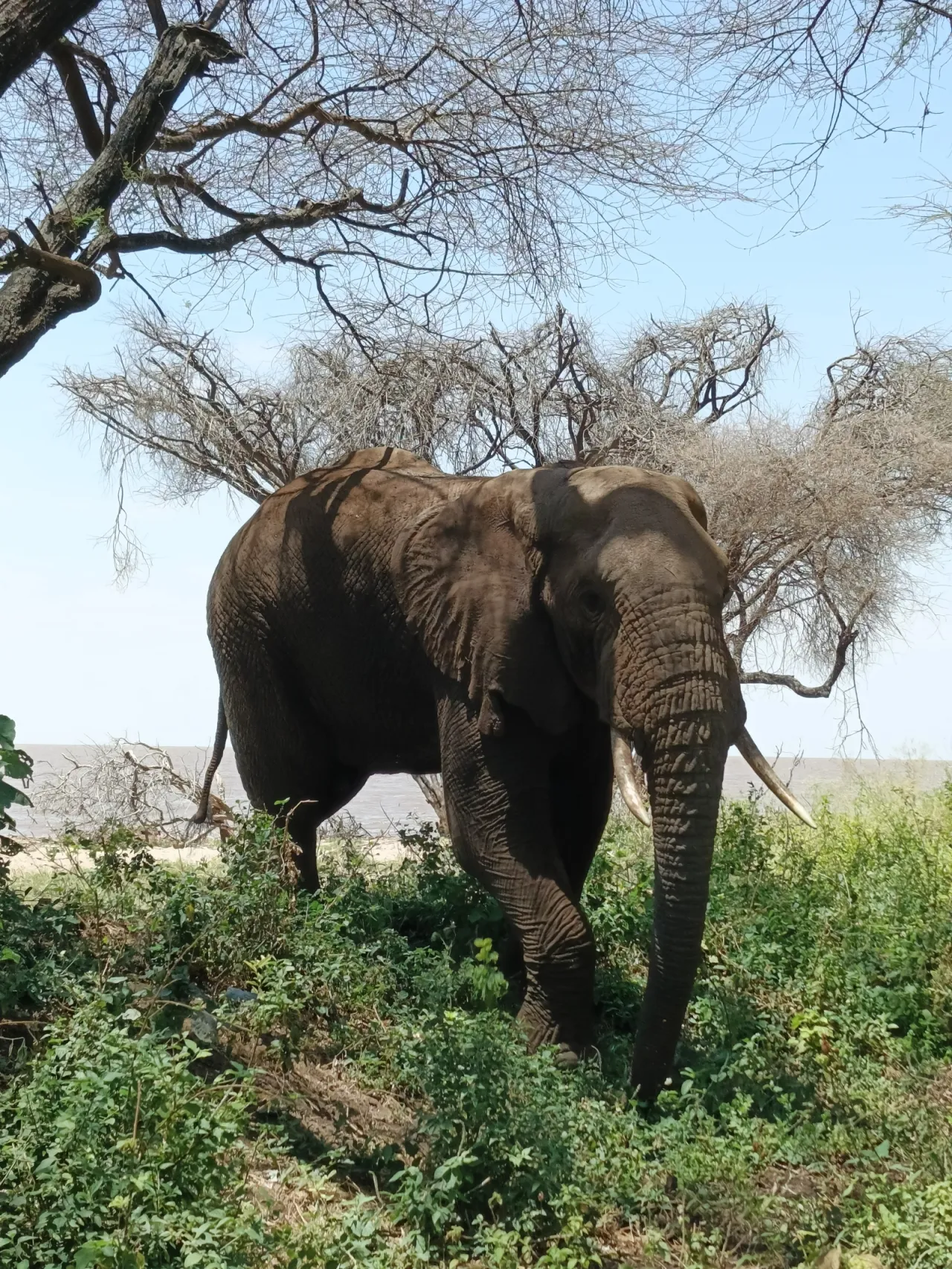
Tarangire is known for its elephants, often in large family groups digging in the riverbed for water, and for its ancient baobab trees, fat grey trunks that make the park look unlike anywhere else on the northern circuit. Buffalo, zebra, wildebeest, giraffe, impala and the smaller dik-dik are common along the river, with lion and leopard present. TANAPA says the density of large animals in October is second only to the Ngorongoro Crater.
You spend the day game-driving with a picnic lunch, keeping to the river where the concentrations are. Wear light, neutral colours: the woodland has tsetse flies, which are attracted to dark blue and black. In the late afternoon you drive to Karatu in the Ngorongoro highlands, about two hours away. Overnight: a lodge or tented camp.
Day 2: Ngorongoro Crater to the central Serengeti
A pre-dawn start with a packed breakfast, so you are among the first vehicles down into the Ngorongoro Crater. July to October mornings on the rim are cold and often misty, and the first hours on the floor are the quietest. The crater is a collapsed volcano about 20 km across and 610 m deep, and its all-year water and grazing support more than 25,000 large animals, according to the NCAA. Lion, spotted hyena, buffalo, zebra, wildebeest and hippo are regular, and it is one of the most reliable places in Tanzania to look for black rhino.
After around four to five hours on the floor you climb back to the rim and drive west across the highlands, past Maasai bomas and down onto the plains to Naabi Hill Gate, the main entrance to Serengeti National Park. From the rim to Seronera in the central Serengeti is roughly three to four hours with a stop at the gate for formalities.
It is a long day, but the last stretch is itself a game drive through the Seronera area, where lion, cheetah and leopard are resident whatever the migration is doing. Overnight in the central Serengeti: a lodge or tented camp.
Day 3: Central Serengeti to the northern Serengeti
An early morning game drive around the Seronera River, where leopard often rest in the sausage trees and yellow-barked acacias along the watercourse, then you head north. The drive to the Kogatende area takes most of the day, roughly five to seven hours including game viewing and a picnic lunch, and it shows you how varied the Serengeti is.
North of Seronera the plains give way to rolling hills and granite outcrops around Lobo, then to broken woodland and long grassy valleys as you get closer to the Kenyan border. In July to October you may meet columns of wildebeest and zebra well before the river, particularly early in the season when herds are still moving up through the park. Elephant, giraffe, topi and eland are common along the way.
Your guide will be in contact with other guides during the drive, building a picture of where the herds are gathering and which crossing points have been active. You reach your base near the Mara River in the late afternoon, in time to hear the evening chorus of hippos and, most nights, hyenas. Overnight in the northern Serengeti: a lodge or tented camp.
Day 4: Mara River: first full day
The Mara River rises in Kenya and runs west through the far north of the Serengeti before flowing to Lake Victoria. In the crossing season herds build up on its banks, drawn by grass on the other side, and at some point, for reasons nobody can predict with confidence, the first animal plunges in and the rest follow. Crossings can go in either direction and can last from a few minutes to over an hour.
Most of today is spent at or near the river, with a packed breakfast and lunch so you do not have to leave if a herd looks ready. Guides keep a respectful distance from crossing points, because vehicles crowding the bank can make herds turn back. Nile crocodiles and hippos live in the river, and researchers from Yale and the Cary Institute estimated that an average of about 6,250 wildebeest drowned each year in the Kenyan stretch of the Mara between 2011 and 2015.
Waiting is part of the experience. A day can bring two crossings or none, so bring a book, binoculars and patience. Overnight in the northern Serengeti: a lodge or tented camp.
Day 5: Northern Serengeti: Lamai and the river crossings
Where you spend today depends on yesterday. If the herds have moved across the Mara, your guide may cross the river by bridge to the Lamai area, the wedge of Serengeti between the Mara River and the Kenyan border. If they are massing on the southern bank, you stay on that side and watch the crossing points.
The northern Serengeti is worth seeing even without a crossing. Resident lion prides hunt the passing herds, cheetah use the open ridges, and the riverine forest along the Mara holds birds you will not see on the southern plains. With the herds nearby you may watch lions on a kill, hyenas and vultures working a carcass, or thousands of wildebeest grazing and calling in the evening light.
The pattern of the day is flexible: out early, a picnic in the shade near the river, a rest in the heat of the afternoon if nothing is happening, then back out for the last two hours of light. Evenings in the north can be cool, so keep a warm layer in the vehicle. Overnight in the northern Serengeti: a lodge or tented camp.
Day 6: Northern Serengeti: final full day
Your third full day in the north is the reason this itinerary exists. Crossings are unpredictable, and a third day gives you another chance if the first two were quiet, or a chance to watch from a different point if you have already seen one. Your guide will plan the day around the latest news from the river and from other vehicles.
If you have already seen what you came for, this is a good day for a change of pace: a longer drive along the river to look for leopard in the riverine trees, a morning among the kopjes, or simply staying with one herd and watching how it behaves, from the constant grunting to the sudden stampedes when something spooks them. Hot-air balloon flights operate in parts of the Serengeti and can sometimes be booked as an optional extra; ask about availability in advance.
Enjoy your last evening in the bush. Nights in the northern Serengeti are dark, with very little light pollution, and on a clear night the Milky Way is bright overhead. Your guide will confirm the time of tomorrow's flight and luggage allowance. Overnight in the northern Serengeti: a lodge or tented camp.
Day 7: Morning game drive and flight from Kogatende to Arusha
A last early game drive along the Mara, with a final look at the herds if they are still nearby, then back for a late breakfast and to pack. Your guide drives you to Kogatende airstrip for a scheduled light-aircraft flight to Arusha. These flights often stop at one or more other Serengeti airstrips on the way, so allow a couple of hours in total; seen from the air, the scale of the ecosystem you have just crossed by road is striking.
Light aircraft have strict luggage limits, and airlines usually require soft bags rather than hard suitcases, so pack with this flight in mind from the start. Your guide and vehicle will already be on their way back to Arusha by road, a journey that takes two days.
You land at Arusha airport around midday or early afternoon, depending on the schedule, and are met for the transfer to your hotel or on to Kilimanjaro International Airport (JRO) for an evening international flight. If your connection is tight, spend an extra night in Arusha rather than risk it.
Destinations
Frequently asked questions
When do the Mara River crossings happen?
Crossings usually take place between about July and October, when many of the herds are in the northern Serengeti and Kenya's Maasai Mara. The timing varies every year with the rains, and herds cross back and forth several times, so there is no fixed date.
Is a river crossing guaranteed on this safari?
No. Herds can gather on the riverbank for hours or days and then move away without crossing. Spending three full days near the river gives you a much better chance than a single day, but no honest operator can guarantee a crossing.
Why fly back from the northern Serengeti instead of driving?
Driving from the Mara River back to Arusha takes two long days. Flying from Kogatende airstrip gets you to Arusha in a few hours and gives you an extra full day in the north, which is where the crossings happen.
Is July to October a good time for Tarangire and the Ngorongoro Crater?
Yes. It is Tarangire's best season, when wildlife gathers along the river, and the crater is good all year because most of its animals are resident. Mornings on the crater rim are cold in these months, so bring a warm layer.
Can I see the crossings from the Tanzanian side?
Yes. The Mara River runs through the far north of Serengeti National Park around Kogatende and Lamai, and many crossings happen on the Tanzanian stretch. Popular crossing points can still draw a number of vehicles in peak weeks.