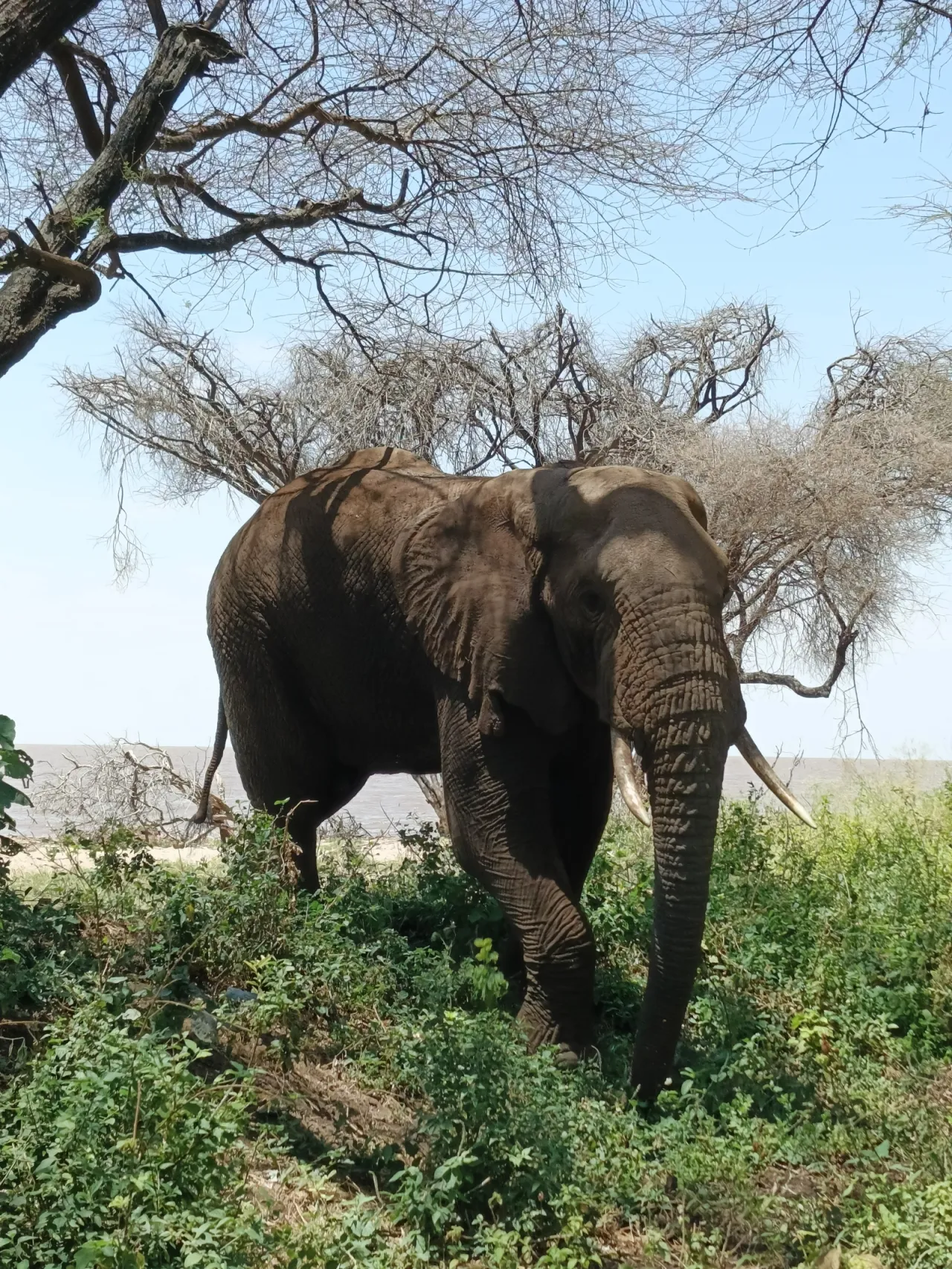
4-Day Tarangire, Serengeti and Ngorongoro Safari
The shortest safari that reaches the Serengeti: a day in Tarangire, a night in the central Serengeti around Seronera, and the Ngorongoro Crater on the way home. Busy but workable for travellers short on time.
- Duration
- 4 days
- Style
- Mid-range
- Travel
- Private safari
- Visits
- Tarangire National Park, Serengeti National Park, Ngorongoro Conservation Area
Four days is the shortest trip that gets you into the Serengeti by road and still includes Tarangire and the Ngorongoro Crater. You start with a full day among Tarangire's elephants and baobabs, cross the Ngorongoro highlands onto the Serengeti plains, spend a night in the central Serengeti around Seronera, then come back through the conservation area for a day in the crater.
Be clear about the trade-off. The Serengeti is big, and with one night there a good share of days 2 and 3 is spent driving, although most of that driving is a game drive once you pass Naabi Hill Gate. The central Serengeti is chosen because it has resident wildlife all year and is the closest part of the park to reach. The migration herds may or may not be nearby: their position depends on the rains and changes every year.
If you can add one or two days, a second Serengeti night makes a noticeable difference; see the 6-day classic safari.
Highlights
- A full day in Tarangire, known for elephants and ancient baobabs
- The drive across the Ngorongoro highlands and down onto the Serengeti plains
- Afternoon and early-morning game drives in the central Serengeti around Seronera, known for big cats
- A morning on the floor of the Ngorongoro Crater, among the most reliable places in Tanzania for black rhino
- Private vehicle and guide throughout
Day 1: Arusha to Tarangire National Park, then Karatu
Pickup from your Arusha hotel is at around 7:00–7:30 a.m. The drive to Tarangire's main gate in the north of the park is about 121 km on tarmac, roughly 1.5 hours, through dry Maasai country where you will see herders and cattle along the road.
Tarangire is best known for its elephants and its baobabs. In the dry season, roughly July to November, the Tarangire River becomes the main water for the surrounding Maasai Steppe, and elephants gather along it in large family groups, with buffalo, zebra, wildebeest and giraffe coming down to drink. Lion and leopard are present, and the park has an unusually rich resident birdlife, from bateleur eagles to the tiny pygmy falcon.
You spend most of the day in the northern part of the park around the river, which is where the animals concentrate. Lunch is a picnic at a designated site. Tsetse flies are common in the woodland, so neutral, medium-weight clothing is more useful than repellent. In the late afternoon you leave the park and drive to Karatu in the Ngorongoro highlands, approximately 1.5–2 hours, arriving around dusk. Staying in Karatu puts you in position for an early start towards the Serengeti.
Overnight: a lodge or tented camp.
Day 2: Karatu to the central Serengeti
This is the long day, so you leave Karatu at about 7:00 a.m. It is roughly 30 minutes to the Lodoare gate of the Ngorongoro Conservation Area and then about an hour up through montane forest to the crater rim, where you stop at the viewpoint to look down into the caldera you will visit on day 4. The road then drops west through Maasai grazing land onto the short-grass plains.
From the rim to Naabi Hill Gate, the main entrance to Serengeti National Park, is roughly 2–3 hours on a gravel road that can be rough and dusty. Lunch is usually a picnic at Naabi Hill while your guide completes the park formalities, and the hill gives a wide view over the plains. From about December to April the migration herds are often on these southern plains, although this varies each year.
After lunch the drive to the Seronera area in the central Serengeti, about 60 km, becomes an afternoon game drive. Seronera's river valleys and granite kopjes are known for lion, leopard and cheetah, and this area has resident game all year. Expect to reach your camp or lodge before dark. The whole day is approximately 5.5–7 hours on the road including stops.
Overnight: a lodge or tented camp.
Day 3: Serengeti morning game drive, then back to Ngorongoro
An early game drive gives you the best of the Serengeti in the time available. You leave at around 6:30 a.m., when predators are most active and the light is soft, and spend the morning around the Seronera River and the nearby kopjes. Leopards often rest in the sausage trees and acacias along the river, lions use the kopjes as lookouts, and cheetah hunt on the open plains. Your guide will also be listening to the radio for news of where other vehicles have found something.
You return to camp for breakfast or take a picnic breakfast in the park, then set off back towards Naabi Hill Gate at around 10:30–11:00 a.m., game viewing along the way. Park rules require you to leave by the gate closing time, and the drive back to the Ngorongoro highlands takes roughly 4–5 hours with a lunch stop.
If time allows, your guide can make a short detour to Olduvai Gorge, whose fossil beds hold some of the best-known evidence of early human ancestors; this adds roughly an hour. You arrive at your overnight stop on or near the crater rim, or in Karatu, in the late afternoon. Evenings up here are cool, so keep a fleece handy.
Overnight: a lodge or tented camp.
Day 4: Ngorongoro Crater and return to Arusha
NCAA rules allow driving in the conservation area from 6:00 a.m., and an early start means fewer vehicles and better light. Depending on where you slept, you leave between about 6:00 and 6:30 a.m., often with a packed breakfast. The rim is over 2,000 m and mornings are cold and often misty, so dress in layers.
The Ngorongoro Crater is a volcanic caldera about 20 km across and roughly 610 m deep, with a floor of about 260 km². The NCAA puts its population at over 25,000 large animals, most of them resident because water and grass last all year. You drive between the open grassland, the soda lake, the swamps and the Lerai forest, looking for black rhino, which are usually seen at a distance, as well as lion, buffalo, elephant, hyena and big herds of zebra and wildebeest. Only four-wheel-drive vehicles are allowed on the floor, and you stay inside the vehicle except at designated picnic sites.
After around five to six hours and a picnic lunch, you climb out in the early afternoon and drive back to Arusha, roughly 3.5–4 hours, arriving in the late afternoon or early evening.
Destinations
Frequently asked questions
Is one night in the Serengeti worth it?
It is worth it if four days is all you have, because the central Serengeti around Seronera has resident wildlife all year. Expect a lot of time in the vehicle, although much of it is spent game viewing. With a spare day, a second night makes the Serengeti far more relaxed.
Will I see the Great Migration on this safari?
Possibly, but it is not something this itinerary can promise. From about December to April the herds are usually on the southern plains, which you cross on day 2, and later in the year they are often in the west and north, beyond the area covered here. Their timing changes every year with the rains.
How long is the drive from Arusha to the Serengeti?
By road it is a full day with stops, which is why this itinerary breaks the journey with a night in Karatu after Tarangire. From Karatu to the central Serengeti is roughly 5.5–7 hours including the stop at Naabi Hill Gate and game viewing on the way in.
Can I fly back instead of driving?
Scheduled flights link the Seronera airstrip with Arusha, so a fly-out version is possible, but it would replace the Ngorongoro Crater day. Ask for a quote if you want to compare the two options.