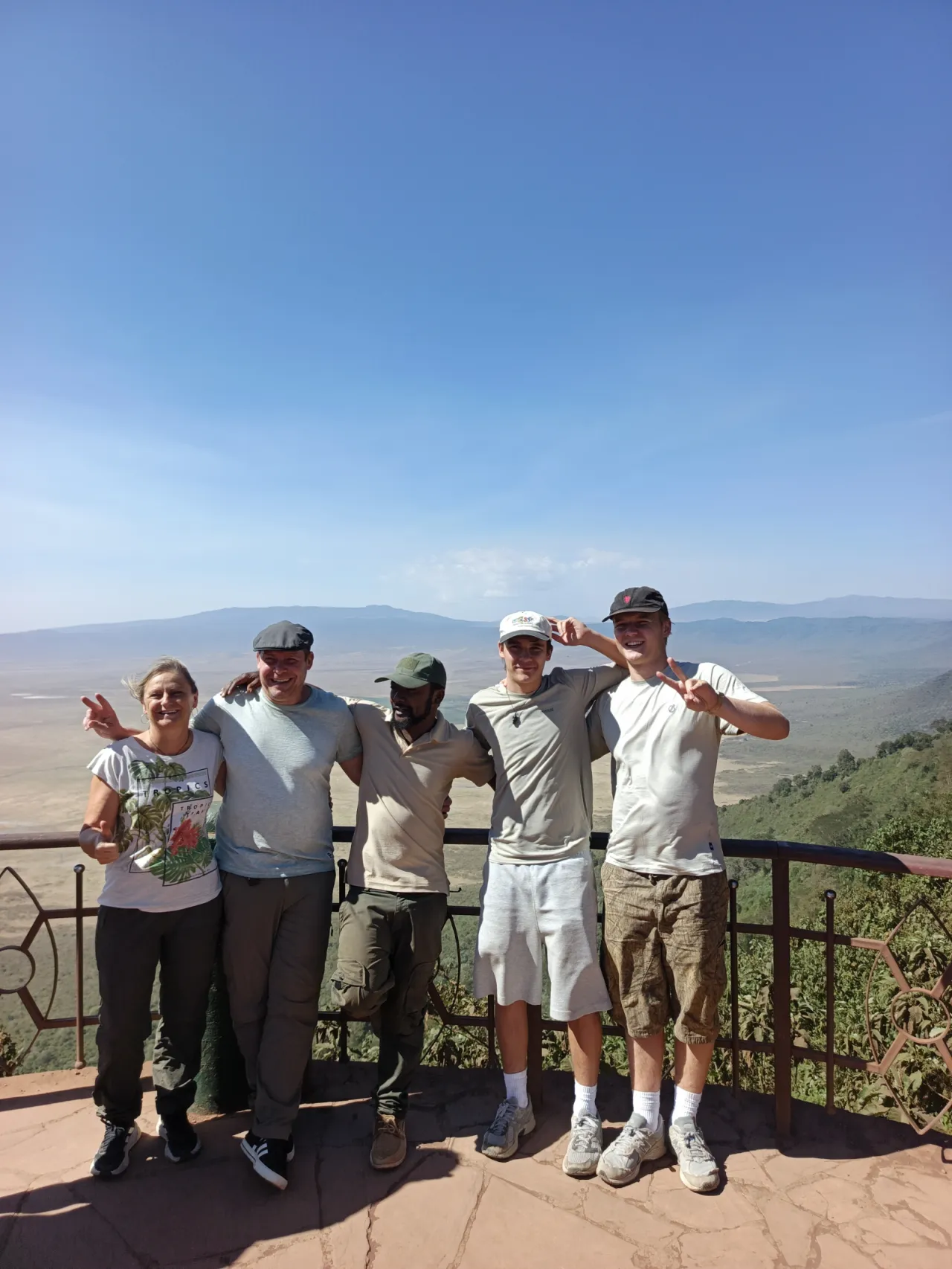
3-Day Tarangire, Lake Manyara and Ngorongoro Safari
Three parks in three days with short drives: a full day in Tarangire, a morning in Lake Manyara and a day in the Ngorongoro Crater. A good fit after a Kilimanjaro climb or when time is tight.
- Duration
- 3 days
- Style
- Mid-range
- Travel
- Private safari
- Visits
- Tarangire National Park, Lake Manyara National Park, Ngorongoro Conservation Area
This is the short version of the northern circuit: three days, three very different places, and no single drive much longer than four hours. You spend a full day in Tarangire National Park among elephants and baobabs, a morning in Lake Manyara National Park under the Rift Valley wall, and most of a day on the floor of the Ngorongoro Crater before driving back to Arusha.
It suits people who have just come off Kilimanjaro and want wildlife without long transfers, and anyone with only a few days to spare. It leaves out the Serengeti on purpose: getting there and back properly needs at least two more days. If you have them, the 4-day or 6-day itineraries are a better use of the time.
The safari is private, so start times, lunch stops and how long you stay at a sighting are agreed with your own guide. After a climb, a night's rest in Arusha or Moshi before the first game drive makes the first day far more enjoyable.
Highlights
- A full day in Tarangire, known for large elephant herds and baobab trees
- Lake Manyara's groundwater forest, baboon troops and lake-shore birdlife
- Most of a day on the floor of the Ngorongoro Crater, one of the best places in Tanzania to look for black rhino
- Short drives: the longest leg is the return to Arusha, roughly 3.5–4 hours
- Private vehicle and guide, so the pace is set around you
- Works well as a rest-your-legs safari after Kilimanjaro
Day 1: Arusha to Tarangire National Park
Your guide collects you from your hotel in Arusha at around 7:30 a.m. (from Moshi, allow roughly an extra hour and a half on the road). The tarmac road heads west through Maasai grazing country, and Tarangire's main gate in the north of the park is about 121 km from Arusha, roughly 1.5 hours' drive. Your guide sorts out the park permits at the gate while you stretch your legs.
Tarangire is known above all for elephants. In the dry season, roughly July to November, the Tarangire River is the main water source for a large part of the Maasai Steppe, and elephants, buffalo, zebra and wildebeest gather along it. The ridges above the river are covered in baobabs, some more than 1,000 years old according to TANAPA. Lion and leopard live here too, and the birding is good in every month.
The plan is a full day in the park: a morning drive along the river, a picnic lunch at a designated site, and a slower afternoon drive as the light softens. Wear neutral, medium-weight clothing, because tsetse flies are common in the woodland. You leave before the gate closes at 6 p.m. and drive on to your overnight stop towards Mto wa Mbu or Karatu, approximately 1–1.5 hours.
Overnight: a lodge or tented camp.
Day 2: Lake Manyara National Park and Karatu
After breakfast you leave at around 7:30 a.m. for the main gate of Lake Manyara National Park, near the town of Mto wa Mbu. The park runs along the foot of the western wall of the Great Rift Valley, and the change from yesterday is striking: steep escarpment on one side, a shallow soda lake on the other.
The morning drive starts in the groundwater forest at the northern end, fed by springs seeping from the base of the escarpment. This is where you look for blue monkeys and the big baboon troops the park is known for, and where elephants move quietly between fig and mahogany trees. Further south the forest opens into acacia woodland and grassy floodplain, with hippo pools near the shore and pelicans and, at some times of year, flamingos on the lake. Lions here sometimes rest in trees, but treat that as a bonus rather than a plan.
You spend around four to five hours in the park, with lunch either as a picnic or after you leave. In the afternoon you drive up the escarpment to Karatu, about 30 km and under an hour. The rest of the afternoon is free: the highlands around Karatu are cooler and greener, and the early night is useful before the crater.
Overnight: a lodge or tented camp.
Day 3: Ngorongoro Crater and return to Arusha
An early start pays off in the crater, so expect to leave Karatu at about 6:00–6:30 a.m. with a packed breakfast or after an early one. It is roughly 30 minutes to the Lodoare gate of the Ngorongoro Conservation Area, then about an hour up through the highland forest to the rim and along to the descent road. Bring a warm layer: the rim is over 2,000 m and mornings are often cold and misty.
The crater floor covers about 260 km² and holds some 25,000 large animals, according to the NCAA. Most are resident because water and grazing last all year, so the game viewing is good in any season. The crater is one of the most reliable places in Tanzania to look for black rhino, usually at a distance, and lion, buffalo, elephant, zebra, wildebeest, hyena and hippo are regularly seen. Only four-wheel-drive vehicles are allowed down, and you stay in the vehicle except at designated picnic sites.
You spend around five to six hours on the floor, with a picnic lunch at a designated site, then climb out in the early afternoon. The drive back to Arusha takes roughly 3.5–4 hours, so you reach your hotel in the late afternoon or early evening, in time for an evening flight from Kilimanjaro International Airport if needed.
Destinations
Frequently asked questions
Is three days enough for a Tanzania safari?
Three days is enough for Tarangire, Lake Manyara and the Ngorongoro Crater with sensible driving times. It is not enough to add the Serengeti without spending most of the time in the vehicle, so allow at least four days if the Serengeti matters to you.
Can I do this safari straight after climbing Kilimanjaro?
Yes, and it is one of the most popular ways to do it. A night's rest in Moshi or Arusha after the climb helps, and the short drives on this route suit tired legs. Most of the day is spent sitting in the vehicle.
Will I see the Big Five on a 3-day safari?
You have a reasonable chance of seeing lion, elephant and buffalo, and the Ngorongoro Crater is one of the better places in Tanzania for black rhino. Leopard are shy and rhino keep their distance, so no one can promise all five.
What is the best time of year for this safari?
The dry season, roughly June to October, is best for Tarangire because wildlife gathers along the river. The Ngorongoro Crater is good all year because most of its animals are resident. The green season brings fewer vehicles, lush scenery and good birding.